What You Paid Isn't What It Cost You: The Hidden Middle Expenses Every Reseller Needs to Track
Photo: reseller calculating costs with spreadsheet and packaged products on desk, via stadiumseatingplan.com
There's a moment every reseller knows well. You do the quick mental math—buy low, sell high, pocket the difference—and it feels like a no-brainer. Then the sale goes through, you check your actual take-home, and the number is somehow... smaller than expected. Way smaller.
What happened? The flip tax happened.
It's not a real tax, obviously. But it might as well be. It's the collection of costs that live in the middle of a transaction—between the moment you acquire something and the moment real money lands in your account. These expenses don't show up on a single invoice. They're scattered, easy to forget, and collectively capable of turning a solid-looking deal into a break-even headache.
If you're serious about reselling—whether you're moving electronics, vintage clothing, collectibles, or general merchandise—understanding this middle zone isn't optional. It's the difference between building a real business and just staying busy.
The Inspection Problem Nobody Talks About
Before anything gets listed, it usually needs to be looked at. Carefully. That takes time, and sometimes it takes money.
For lower-cost items, a visual once-over might be enough. But for anything with mechanical parts, electronics, or significant resale value, you may need to test functionality, verify authenticity, or even pay someone else to evaluate the item. Think about the reseller who buys a lot of used power tools—each one needs to be plugged in, tested, and assessed before it can be accurately described in a listing.
Skipping this step is a gamble. List something as working and it turns out it doesn't, and now you're dealing with a return, a refund, and a damaged reputation. That's a cost that compounds.
Factor in your time here too. If you spend 30 minutes inspecting and photographing a single item that sells for $40, and your time is worth anything at all, that math needs to show up somewhere in your pricing.
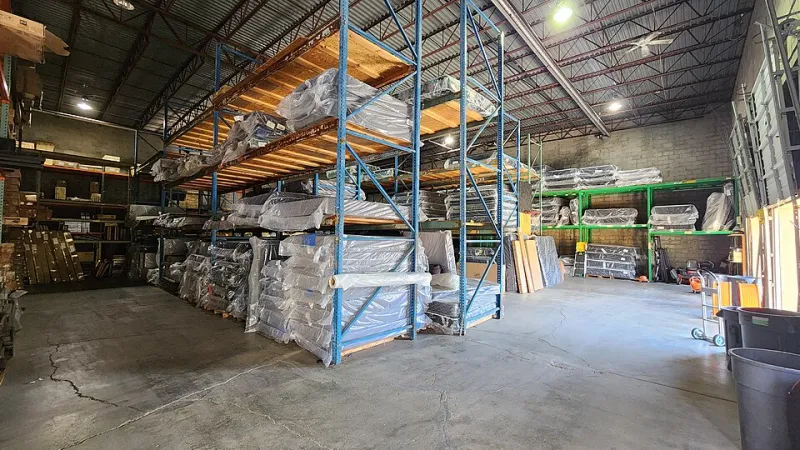
Storage: The Silent Monthly Drain
Inventory sitting in your garage, storage unit, or spare bedroom isn't free. Even if you're not writing a check to a storage facility, there's an opportunity cost—that space could be used for something else, and if you are renting space, every unsold item is eating into your overhead.
Pro resellers think about this in terms of velocity. How long is this item likely to sit before it sells? A product that moves in a week has a very different storage cost than one that lingers for three months. Slow-moving inventory ties up capital and space, both of which could be working harder for you elsewhere.
A rough way to handle this: estimate your monthly storage cost (even a ballpark figure for your garage or basement), divide it by the number of items you typically hold, and assign a per-item storage cost. It won't be precise, but it'll be closer to reality than ignoring it entirely.
Photography and Presentation Aren't Free Either
Great photos sell products. That's not an opinion—it's documented reality in e-commerce. But producing great photos takes equipment, time, props, backgrounds, and sometimes editing software.
If you're shooting on a phone with decent lighting, your out-of-pocket cost might be minimal. But your time cost is real. And if you ever outsource photography, or invest in a lightbox, a backdrop, or a ring light, those are legitimate business expenses that belong in your cost model.
The same logic applies to writing listings. Crafting a description that's accurate, compelling, and optimized for search doesn't happen instantly. That time has value.
Packing Materials Add Up Faster Than You Think
Boxes. Bubble wrap. Packing peanuts. Tape. Poly mailers. Labels. These seem trivial until you're shipping volume, and then suddenly you've spent $80 at the office supply store and barely noticed.
Shipping supplies are one of those costs that resellers consistently underestimate, especially when they're starting out. The fix is simple: track what you spend on materials over a month and divide it across the number of shipments you sent. Now you have a real per-order packing cost to build into your pricing.
For fragile or oversized items, this number can get significant quickly. A single well-packed lamp might require $6 to $10 in materials alone before it even reaches the carrier.
Platform Fees: The Ones You See and the Ones You Don't
Most sellers know about the headline fee—the percentage a platform takes from each sale. What's easier to miss is how those fees stack when you're operating across multiple platforms, or how they interact with payment processing fees, listing upgrade fees, subscription costs, and promotional boosts.
Run the actual numbers. Take your last ten transactions and calculate the total fee load as a percentage of the sale price. For many sellers, the real fee burden lands between 12% and 18% of revenue when everything is accounted for. That's a significant slice, and it needs to be baked into your pricing from the start—not discovered after the fact.
Returns Are a Cost of Doing Business
Even if you describe everything perfectly and ship with care, returns happen. Buyers change their minds. Items arrive with minor damage. Descriptions and expectations don't always align.
Here's the thing: the cost of a return isn't just the refund. It's the return shipping, the time spent processing it, the potential that the item is now unsellable at full price, and the platform fees that may or may not be reimbursed. A single return on a low-margin item can wipe out the profit from several successful sales.
Smart resellers build a returns buffer into their margins—typically 1% to 3% of revenue, depending on the category. It's not pessimistic; it's just accurate accounting.
Building Your Pre-Buy Cost Calculator
Here's the practical takeaway: before you commit to buying any inventory, run it through a simple checklist.
- Acquisition cost (what you're paying)
- Inspection time (your time, valued honestly)
- Storage cost (per item, per expected hold time)
- Photography and listing time
- Packing materials (realistic estimate per unit)
- Shipping cost (or buyer-paid vs. absorbed)
- Platform fees (full stack, not just the headline rate)
- Returns buffer (1–3% depending on category)
- Your target profit margin
Add all of that up. That's your real cost. Now look at what the item is likely to sell for. If the gap between your total cost and your expected sale price doesn't leave you with a margin you're happy with, pass on the deal—no matter how good the purchase price looks on the surface.
The resellers who consistently make money aren't necessarily finding better products than everyone else. They're just doing the math more completely. They account for every dollar between the buy and the sale, and they don't let a low sticker price trick them into ignoring everything that comes after it.
Buy smart. That means knowing your real costs before you ever click confirm on a purchase.