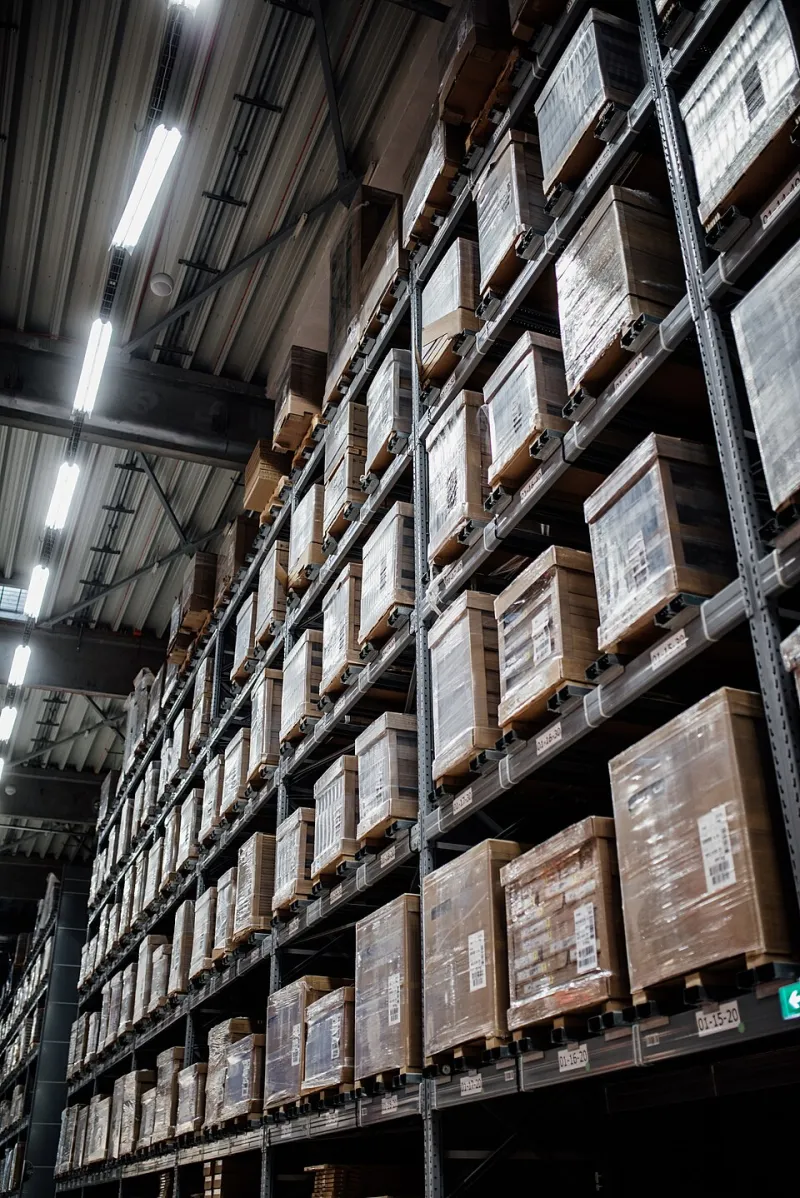
More Isn't Always More: The Hidden Dangers of Going All-In on Bulk Inventory

Photo: WaterbedsRobbie, CC BY-SA 4.0, via Wikimedia Commons
There's a certain thrill that comes with landing a bulk deal. You negotiate a killer unit price, the supplier confirms the order, and for a moment you feel like you've cracked the code. Lower cost per item, bigger potential margins — what's not to love?
Plenty, actually.
For online resellers, bulk buying is one of those strategies that looks great on a spreadsheet and falls apart in the real world. It's not that buying in volume is always a bad idea. It's that most sellers never sit down and run the full numbers before they commit. And by the time the reality hits, they're sitting on three hundred units of a product that's already been undercut by competitors and gathering dust in a storage unit they're paying $180 a month for.
Let's break down why bulk buying is trickier than it looks — and how to figure out when it actually makes sense.
The Unit Cost Illusion
Here's the trap most resellers fall into: they evaluate a bulk deal almost entirely on unit cost. You're paying $4 per item instead of $7 — that's a 43% savings, right? Time to load up.
Not so fast.
Unit cost is just one variable in your profitability equation. The real question isn't "how much does each item cost me?" — it's "how much does each item cost me by the time it sells?" That's a very different number, and it includes things like:
- Storage costs (whether that's a warehouse, a 3PL service, or your garage slowly turning into a fulfillment center)
- Platform and listing fees that accumulate over time
- The cost of capital — money tied up in inventory can't be used to buy other, faster-moving products
- Depreciation and obsolescence — some products lose value the longer they sit
- Shipping and handling on larger incoming orders
Once you factor all of that in, that $4 unit cost might quietly creep up to $5.50, $6, or more. Suddenly the bulk deal doesn't look nearly as sweet.
Slow Inventory Turnover Is a Silent Killer
One of the most underestimated risks in bulk buying is turnover rate. When you buy 50 units of something, you might move through them in three weeks. Buy 500, and you might be looking at six months — or longer.
Why does that matter so much? Because slow-moving inventory has a compounding cost. Every week those units sit unsold, you're paying to store them, your money is locked up, and the market is shifting around you. Prices fluctuate. Competitors drop their rates. New versions of the product launch. Consumer trends move on.
What was a hot seller in January might be a hard sell by April. Bulk buying amplifies this risk dramatically. You're not just exposed to market shifts — you're deeply exposed, because you've got a lot riding on one product holding its value and demand.
The Opportunity Cost Nobody Talks About
This one's sneaky. Even if your bulk inventory eventually sells, you need to ask yourself: what else could you have done with that capital?
Say you spent $2,000 on a bulk order of one product. Over the next four months, that money is tied up. Meanwhile, three other fast-moving product opportunities come and go — things you couldn't jump on because your cash was already committed. That's opportunity cost, and it's a real drag on your overall business performance even when it never shows up on a single invoice.
Resellers who consistently outperform aren't just good at finding deals. They're good at keeping their capital flexible, so they can move quickly when the right opportunity shows up.
Market Saturation: When Everyone Else Had the Same Idea
Here's another scenario that plays out more often than sellers expect. You find a product at a great bulk price, load up, and start listing. Then you notice something: six other sellers had the exact same idea. Supply floods the market, prices drop, and now you're in a race to the bottom just to move your inventory before it becomes completely worthless.
This is especially common with trending or seasonal products. By the time a bulk deal is widely available, the product is often already past its peak demand window. The suppliers have caught up with demand, and so has everyone else who buys from them.
How to Calculate Your Real Breakeven Point
Before committing to any bulk purchase, run this quick framework:
Step 1: Add up ALL your costs. Unit cost + inbound shipping + storage (estimated weeks to sell × weekly cost) + platform fees + payment processing fees = your true cost per unit.
Step 2: Research your realistic sell price. Not the best-case price — the realistic price, accounting for competition and potential market movement over your expected sales window.
Step 3: Calculate your margin. Sell price minus true cost per unit = actual margin. Is it still worth it?
Step 4: Factor in turnover time. If it takes you four months to sell through the order, does the margin still justify the capital being locked up that long? What's your annualized return on that investment?
Step 5: Stress-test the scenario. What happens if the market price drops 20% while you're still holding inventory? Can you still break even? If the answer is no, you're carrying more risk than the deal is worth.
So When Does Bulk Buying Actually Make Sense?
Bulk buying isn't inherently bad — it just requires discipline and honest math. Here are the conditions where it tends to work well:
- You have a proven sales history on the product. You've already sold it, you know your velocity, and you're confident in the demand.
- Storage costs are minimal or already covered. If you're not paying extra to store more units, the equation shifts in your favor.
- The product has a long shelf life and stable demand. Evergreen products with consistent demand are much safer bets than trend-driven items.
- You have a dedicated buyer base or pre-orders. Even better — sell it before you've got it all in hand.
- The capital commitment is proportional to your overall cash flow. Going all-in on one bulk deal is risky. Using a reasonable percentage of your working capital is a different story.
Buy Smart, Not Just Big
At BuyTowe, we're big believers in the idea that smart selling starts with smart buying. And smart buying means looking past the surface-level appeal of a low unit price and asking harder questions about what the full picture actually looks like.
Bulk deals can absolutely be a powerful tool in a reseller's playbook. But they can just as easily become a slow-motion profit leak if you're not doing the real math upfront. Before you place that next big order, take an hour to run through the numbers honestly. Your future self — the one who doesn't have a storage unit full of unsellable inventory — will thank you.